Starting small with wood
Commercial timber culture implies you cannot touch wood without a dedicated detached shed, a cast-iron table saw, and an industrial cyclone filter. In reality, traditional European and Japanese joiners accomplished centuries of world-renowned cabinetry using nothing more than sharp hand planes, pull saws, and a steady clamping surface.
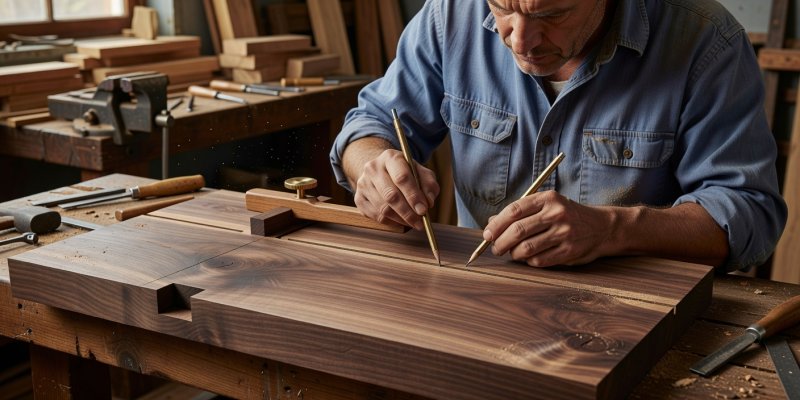
The Kitchen Table Bench Hook
The bench hook is a brilliant piece of historic workshop efficiency. It is constructed from three offcuts of 18 mm birch plywood. One cleat hooks over the front edge of your table; the opposing cleat stops timber moving forward when pushed. With zero clamps bolted to your furniture, downward hand pressure locks timber securely while you saw squarely across the grain.
Why Japanese Pull Saws Outperform Western Push Saws for Beginners
Traditional Western handsaws cut on the push stroke. Pushing forces the thin steel blade under compression, making it prone to buckling unless the blade is manufactured thick and heavy. This wider blade kerf requires massive arm effort and yields rougher cuts.
Japanese saws (nokogiri) cut on the pull stroke. Tension naturally straightens the blade as you draw it toward yourself. The steel can be forged paper-thin (0.5 mm), creating effortless, clean cuts that require practically zero sanding before glue-up.
| Wood Species | Workability Factor | Ideal First Project | Dust / Odor Nature |
|---|---|---|---|
| European Lime (Basswood) | Extremely soft, uniform grain | Relief carving & spoon blanks | Mild pleasant scent, quiet curls |
| American Cherry | Moderate density, takes crisp chisel edges | Desktop dovetail box | Faint sweet aroma, zero splintering |
| English Oak | High hardness, tough medullary rays | Cutting boards, heavy joinery | Acidic tannin odor, requires very sharp steel |
Chisel Sharpening Without Expensive Grinders
A dull chisel is dangerous; you press your whole upper body against it, and when it slips, severe hand lacerations follow. A truly sharp chisel slices end grain wood with the resistance of chilled butter.
Adopt the "scary sharp" glass-and-lapping-film method: adhere 800, 1500, and 3000 grit wet/dry abrasives to a flat float glass tile. Hone the chisel's primary 25-degree bevel, then finish with a 30-degree micro-bevel on leather loaded with green chromium oxide compound. Sharpness is a physical habit, not an expensive machine purchase.